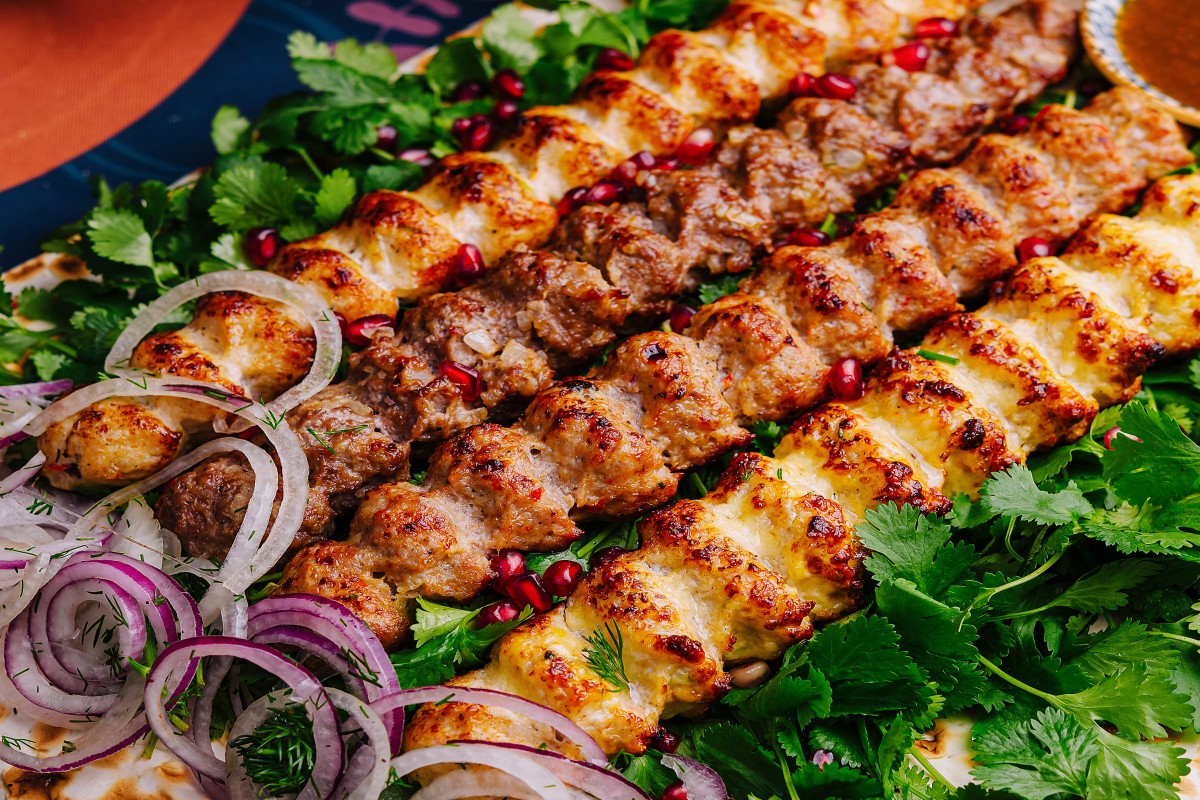
Mastering the nuances of the authentic Persian kabob begins with understanding cut selection, marinade timing, and charcoal temperature management. While casual diners often view skewered grilled meat as straightforward, traditional Iranian grilling (kabob-zani) is an exacting culinary craft honed through specific meat-to-fat ratios and precise butchery.
In this comprehensive guide, we examine the culinary foundations of Koobideh, Barg, and Shish Kabob; compare their textures and preparations; outline expert grilling techniques and side pairings; highlight common ordering mistakes; and explain why booking a table at Kabob Village in Woodland Hills offers the definitive standard for charcoal-grilled skewers.
Understanding the Foundations of the Persian Kabob
Every genuine Persian kabob relies on three core variables: fresh meat selection, aromatic seasoning, and direct charcoal heat. Unlike Mediterranean or American barbecue styles that mask proteins under heavy glazes, thick rubs, or sweet sauces, Iranian recipes highlight the clean flavor of beef, lamb, and poultry.
The primary seasoning agents are simple:
- Grated Yellow Onion: Provides natural sugars, moisture, and mild acidity. The sulfur compounds break down muscle fibers during cold resting.
- Saffron (Za’faran): Bloom in warm water or over ice cubes to create an unmistakable floral aroma and golden-yellow color.
- Pure Sumac: Ground from wild red berries, providing an astringent, tart dusting that balances meat fats.
- Kosher Salt and Coarse Black Pepper: Calibrated to complement, rather than overpower, the natural savory notes.
Beyond seasonings, skewers play a structural role. Flat, wide stainless steel skewers (seekh) conduct internal heat directly into the meat core, cooking the center evenly while the outside forms a caramelized crust over high-heat hardwood coals.
Koobideh, Barg, and Shish Kabob: Cuts, Ratios, and Preparations
Choosing the right Persian kabob comes down to understanding the cuts of meat and how they are shaped before hitting the grill. Each style serves a specific purpose on the plate.
| Kabob Variety | Meat Cut Used | Fat Ratio | Preparation Style | Resulting Texture |
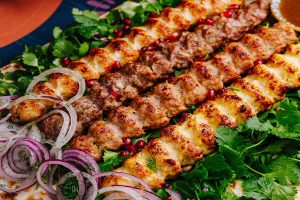
| Kabob Koobideh | Ground beef chuck & lamb shoulder | 20% to 25% fat | Finely minced, kneaded cold, pressed onto wide flat skewers | Exceptionally juicy, melt-in-your-mouth tender |
| Kabob Barg | Beef tenderloin, filet mignon, or lamb sirloin | 5% to 10% fat | Flattened with the back of a chef’s knife into thin sheets | Silky, lean, refined tenderness |
| Shish Kabob | Cubed beef sirloin, filet tips, or lamb leg | 10% to 15% fat | Skewered in uniform 1.5-inch cubes with grilled vegetables | Hearty, charred crust with a succulent center |
Kabob Koobideh: The Test of the Grillmaster
Koobideh is the benchmark of any Iranian kitchen. It blends ground beef chuck and lamb shoulder to achieve about 20% to 25% fat. Puree the grated onions and squeeze them through cheesecloth to remove excess water. If you don’t drain the onion juice, the mixture will slip off the skewer into the fire.
Mix the ground meat with salt, black pepper, and saffron water, then knead vigorously until the proteins denature into a tacky, cohesive paste. The cook shapes the meat onto a wide metal skewer by hand, applying uniform rhythmic thumb indentations (gol انداختن). These ridges allow heat to circulate evenly around the meat, ensuring uniform cooking.
Kabob Barg: The Butcher’s Craft
Barg translates directly to “leaf” in Persian and refers to the thin, broad cut of the finished meat. The chef begins with a whole center-cut beef tenderloin or filet mignon, slices it lengthwise, and uses the flat spine of a heavy knife to spread the meat into a broad ribbon without puncturing the fibers.
Barg’s marinade is minimal: strained onion juice, black pepper, and saffron. Avoid acids like lemon juice or vinegar during long marinades because they chemically “cook” tender beef and dry it out over high heat. The skewer spends only a few minutes over white-hot coals, arriving at the table tender enough to cut with the side of a fork.
Shish Kabob: Hearty and Robust
While Barg emphasizes thin, delicate beef ribbons, Shish Kabob features hearty chunks of center-cut sirloin, filet tips, or tender lamb leg. The cubes are trimmed to uniform size, typically 1.5 inches, to ensure consistent cooking.
Because thicker cubes take longer to cook through than thin ribbons of Barg, Shish Kabob marinades often include a light splash of yogurt or crushed garlic along with onion juice. Skewering the meat on square- or medium-width flat skewers keeps the cubes stationary when you rotate them across the grill grates.
How Chefs Grill the Perfect Persian Kabob
Replicating a professional-grade Persian kabob at home requires strict attention to thermal dynamics and fire control. Professional kitchens rely on open charcoal troughs (manghal) without standard grates, resting skewers directly over hot lump charcoal.
1. Build a bed of natural hardwood lump charcoal (reach ~600°F ash-white heat)
↓
2. Fan coals evenly to eliminate cold pockets and direct grease flares
↓
3. Place skewers across the open trough edges (no grill grates)
↓
4. Flip Koobideh within the first 30 seconds to lock meat onto the skewer
↓
5. Baste continuously with melted butter and bloomed saffron
↓
6. Rest skewers briefly on warm flatbread before plating with saffron rice
Master the Manghal: Step-by-Step Charcoal Grilling Techniques
- Direct Fire Setup: Hardwood lump charcoal burns hotter and cleaner than briquettes. Coals must be ash-white before you place skewers over them to avoid imparting acrid, unburned fuel flavors.
- The Immediate Flip: Koobideh must be rotated within thirty seconds of hitting the heat. This rapid turn sears both sides instantly, forming a protein skin that keeps the fat from dropping and prevents the meat from separating from the skewer.
- Butter and Saffron Basting: Right before skewers finish over the coals, chefs brush them with melted sweet butter blended with bloomed saffron. This seals surface moisture and gives the meat its signature shine.
- The Bread Pull: Finished skewers should never be yanked with tongs. The cook sandwiches the skewer inside a warm sheet of flatbread, grips it gently, and slides the metal blade out, catching all the escaping juices inside the bread.
Essential Sides and Flavor Pairings
A Persian kabob plate is designed as an interactive meal, where savory grilled proteins are balanced against cool, tart, and acidic accompaniments.
- Chelo (Steamed Basmati Rice): Long-grain basmati soaked, parboiled, and steamed with butter. Look for a spoonful of bright yellow saffron-infused rice spread across the top.
- Charred Tomatoes and Peppers: Grill whole Roma tomatoes and hot peppers on separate skewers over low heat until the skins blister and blacken. Mash the softened tomato into your rice with a fork.
- Mast-o Khiar: Creamy strained whole-milk yogurt mixed with diced Persian cucumbers and dried mint. It cuts through the rich lamb fat of Koobideh.
- Sabzi Khordan: A fresh herb platter of fresh mint, basil, tarragon, green onions, and crisp radishes, eaten between bites of hot meat.
- Ground Sumac: Kept in table shakers to dust freely over both rice and meat. Its natural malic and citric acids cut palate heaviness without using liquid dressings.
Common Ordering Mistakes to Avoid
To experience a Persian kabob at its absolute best, keep these practical dining pointers in mind:
- Avoid ordering Barg well-done. Filet-based meats are naturally lean. Cooking Barg past medium-rare or medium strips the meat of its juices, resulting in a tough texture.
- Do not neglect the butter pat. The wrapped butter included on your hot rice platter is meant to be folded immediately into the steaming grains. Doing so adds gloss and moisture to the parboiled basmati.
- Never overlook the Soltani plate. If you are dining with an appetite and cannot decide between ground and whole cuts, order the Soltani (the “Sultan’s plate”), which pairs one skewer of Barg and one skewer of Koobideh side by side.
- Do not let the food sit. Charcoal-grilled meats lose their moisture quickly as they cool. Eat your skewers as soon as they reach the table.
Experience Authentic Skewers at Kabob Village
The hallmark of a memorable Persian kabob comes down to kitchen discipline: daily butchery, properly rested ground meats, and high-heat hardwood charcoal grilling. At Kabob Village in Woodland Hills, our grillmasters honor these classic techniques across every plate we serve. Whether you are stopping in for a quick lunch of juicy Koobideh or gathering the family for a full dinner of Soltani, Shish Kabob, and saffron-scented basmati rice, our dining room delivers the authentic flavors you expect along Ventura Boulevard. Booking your table ahead of time ensures prompt seating and gives our kitchen team time to prepare and grill your skewers fresh over open coals the moment you arrive.
Frequently Asked Questions (FAQ)
What meat is traditionally used in Kabob Koobideh?
Koobideh is traditionally made with ground beef chuck, ground lamb shoulder, or a blend of both. A 20% to 25% fat content is necessary to keep the meat juicy and ensure it adheres to the metal skewer over hot coals.
What is the difference between Kabob Barg and Shish Kabob?
Barg consists of beef tenderloin or filet mignon pounded flat into thin, wide ribbons and quickly seared over high heat. Shish Kabob uses thick, uniform cubes of sirloin, filet, or lamb leg skewered and grilled for a deeper crust and juicy center.
Why is Persian rice served with butter and sumac?
Authentic Persian basmati rice is parboiled and steamed dry, leaving the grains light and separated. Mixing in unsalted butter adds rich moisture, while sprinkling ground sumac provides a bright, citrusy tartness that aids digestion and balances grilled meats.
How do you keep Kabob Koobideh from falling off the skewer?
Kitchens knead the ground meat cold until the proteins form a sticky paste, squeeze all excess liquid from the grated onions, and immediately turn the skewer on the grill within the first thirty seconds to sear and set the exterior.
Is Persian kabob spicy hot?
No. Persian kabobs are savory and aromatic rather than spicy-hot. They rely on onion juice, saffron, black pepper, and sumac for flavor, completely avoiding hot chili peppers or spicy pepper flakes.
What is a Soltani Kabob?
A Soltani (meaning “Sultan’s feast”) is a combination platter that includes one skewer of Kabob Barg (filet mignon ribbon) and one skewer of Kabob Koobideh (seasoned minced meat), offering two distinct textures on a single plate.
Can I order Persian kabobs gluten-free?
Most whole-muscle skewers like Barg and Shish Kabob are naturally gluten-free because their marinades consist only of onion juice, saffron, and black pepper. Always confirm with your server that the kitchen does not use flour or breadcrumbs as a binding agent in ground Koobideh, and ask for rice instead of flatbread beneath the meat.
Reserve Your Table at Kabob Village Today
Taste the difference that seasoned charcoal craftsmanship brings to your plate. Join us at Kabob Village in Woodland Hills to experience juicy Koobideh, tender Barg, and succulent Shish Kabob served over mounds of fragrant saffron basmati rice. Contact Kabob Village today or reserve your table online to guarantee your party an authentic Persian dining experience on Ventura Boulevard.